Written by Lucy Muthui
Since 2018, NairoBits Trust, in partnership with the London School of Economics (LSE), has been championing social innovation in Kenya through the SBize Program. Over seven years, this collaboration has strengthened more than 20 social enterprises, equipping them with skills, networks, and strategies to balance profit with purpose.
Now entering its ninth cycle, SBize 2025/26 introduces four remarkable organizations — each using creativity and entrepreneurship to address pressing social challenges. Selected from over 50 applicants, these enterprises embody a future where business is a driver of both impact and sustainability.
We visited each organization in their communities, spoke with their leaders, and witnessed firsthand the powerful work they are doing. Here are their stories.
When Elizabeth Gitao, Managing Director of DPAK Sacco, speaks about domestic workers, it is with deep conviction.
“Many domestic workers spend years working, but when they retire, they have nothing to fall back on,” she said. “We saw too many cases of old-age poverty among women who had spent their lives serving others. That reality pushed us to act.”
Founded in 2022, DPAK Sacco (short for Domestic Professionals Association of Kenya) empowers domestic workers through financial literacy, savings, and affordable credit. What makes the model unique is that it is owned, run, and designed by domestic workers themselves.

Elizabeth explained:
“We didn’t just want to set up another financial institution. We wanted domestic workers to own their future, to see that they can save, invest, and even buy land. At DPAK, we don’t just offer savings and credit — we offer hope.”

Through initiatives like Money Wise Domestic Workers, members learn budgeting, financial goal-setting, and investment basics. The next step, Money Wise Enterprise, will help those ready to transition into business by equipping them with entrepreneurship and bookkeeping skills.
Stories of transformation are already emerging. Elizabeth shared,
“One of our members, a woman who had worked as a house help for over ten years, proudly told me she now has savings worth 50,000 shillings. Another said she bought her first piece of land — something she never thought possible. That is the change we are most proud of.”
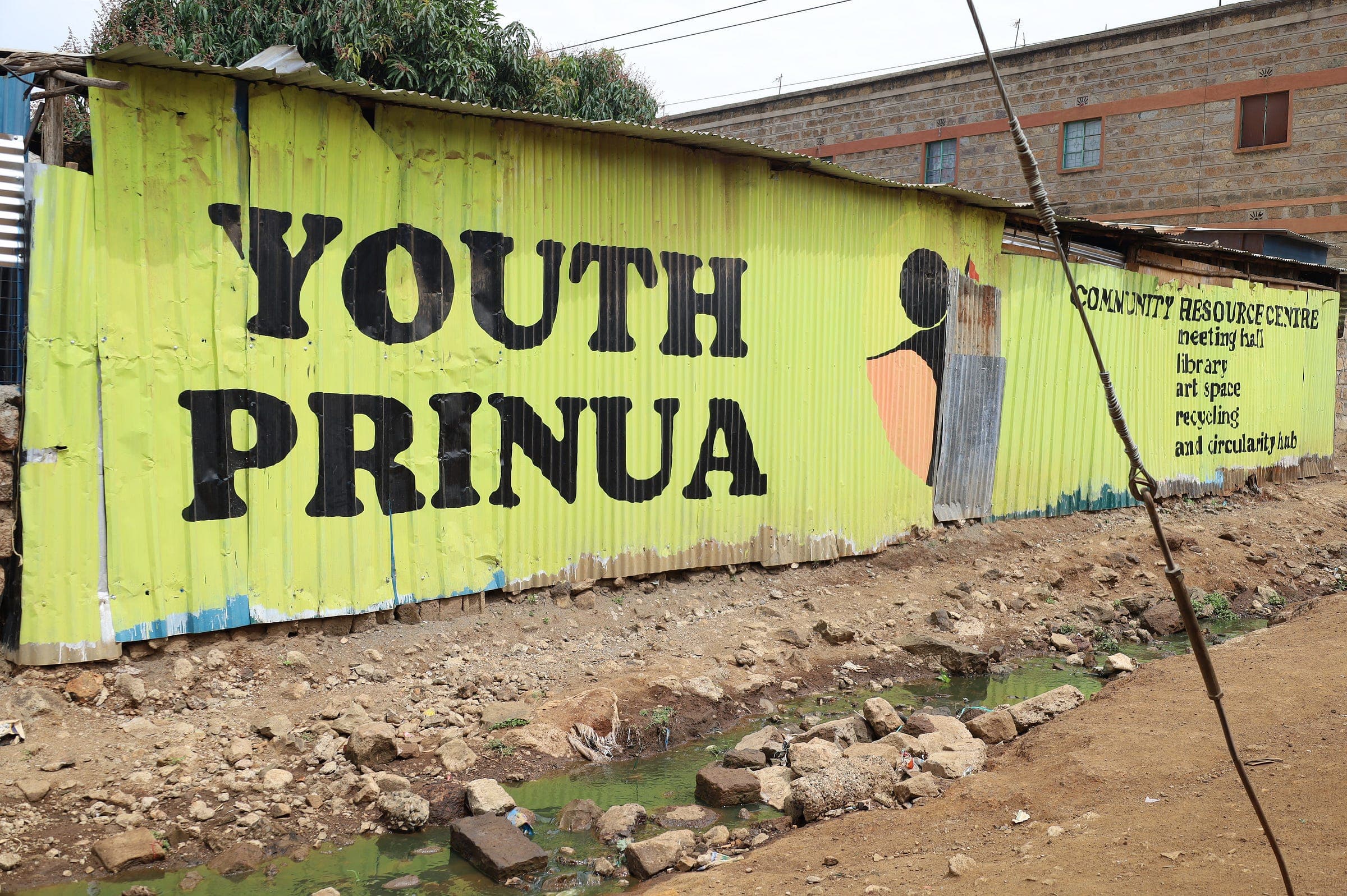
For Washington Mboya, founder of YouthPrinua, the inspiration was simple: young people needed jobs, and communities needed solutions to waste and water scarcity.

“YouthPrinua brings together three ideas,” he explained. “The youth, entrepreneurship, and the Swahili word inua, which means to uplift. That’s exactly what we do — uplift communities while solving environmental challenges.”
YouthPrinua’s flagship initiative, Recycle for Water, invites communities to exchange collected waste for clean water. “In some areas, water is rationed two days a week. By linking waste collection to water access, we make sustainability tangible for people,” Washington said.

The enterprise also runs a Circularity Innovation Hub, where community groups and organizations collaborate to develop new ways of reusing and recycling materials.
“Most people operate on a linear model — use and dump. But we are building circularity. We want waste to move in cycles, to be recycled, upcycled, and given new life. For us, it’s not just about profit — it’s about how our work regenerates the environment and creates jobs,” he said.

One of the most innovative aspects is the ability for residents to track where their waste goes. “When a consumer disposes of waste, they should know it won’t end up in a river or a dumpsite. They should see it transformed into a new product,” Washington added.
With every glass bottle recycled and every plastic repurposed, YouthPrinua proves that sustainability and dignity can go hand in hand.
In Kibera, Serena Rumona, Vice Chairperson of Amani Kibera, welcomed us into a vibrant community hub filled with energy and creativity.
“Amani Kibera is rooted in peacebuilding, education, and empowerment,” she explained. “We started in 2007, right after the post-election violence. Kibera was a hotspot of conflict, so our founders asked: how can we create peace from the ground up?”
One of their answers is sports for peace, where youth and children learn life skills and conflict resolution through games. Another is the Amani Kibera Library, a safe space where young people can study for free. “For us, it’s about creating opportunities where there were none,” Serena said.
Perhaps most inspiring is their Fashion School, which trains young mothers and women with disabilities to design clothes from upcycled denim and Ankara fabric. Serena explained,
“Kenya is one of the largest consumers of secondhand clothes. By upcycling, we reduce waste while creating dignified livelihoods. Every garment sold reinvests into training and economic development for women in Kibera.”
Looking ahead, Amani Kibera is exploring bold new ideas, including a Virtual Reality Museum to showcase daily life in Kibera to global audiences.
“We are not outsiders imposing solutions,” Serena emphasized. “We live here. We walk this path. Our creativity is local, but its impact is global.”
Recently, their work went viral after the Mr. and Ms. Kibera Leadership Contest gained international media attention. “It wasn’t just a pageant,” Serena said with a smile. “It was a statement of leadership and resilience from our community.”
In Kariobangi, James Kitavi, Director of Kiseki Limited, showed us how glass bottles once destined for dumpsites are given a second life.
“Kiseki was born from a simple idea — what if we could close the loop on waste?” he said. “Glass is everywhere. If it isn’t managed properly, it pollutes, injures, and creates health risks. We wanted to change that.”
Every day, Kiseki collects around 100,000 bottles from across Kenya, processing them at its Kariobangi facility. Some are cleaned and repackaged for beverage manufacturers like EABL. Others are transformed into home décor, vases, or even crushed for use in construction.
“Our mantra is zero waste to landfill. Everything we collect — glass, wood, food waste — finds a second life,” James explained. “We own or partner with facilities that ensure every bit of waste is recycled, reused, or upcycled.”

The impact goes far beyond waste management. Kiseki employs 150–180 people directly, many of whom previously worked in unsafe conditions at dumpsites. Indirectly, over 1,000 people benefit as aggregators and suppliers.

“We are giving meaningful jobs to people who once worked in Dandora dumpsite. That is impact you can touch,” James said proudly.
With the tagline Living Tomorrow, Today, Kiseki is making climate action urgent and immediate.
“We cannot wait until tomorrow to act,” James emphasized. “Environmental conservation, social impact, and business growth must go hand in hand today.”
From DPAK Sacco’s financial inclusion for domestic workers, to YouthPrinua’s waste-for-water innovation, to Amani Kibera’s peacebuilding through creativity, and Kiseki’s circular economy model, the 9th Cohort of SBize embodies what it means to build businesses that balance profit, purpose, and sustainability.
We are excited to walk with them on this journey of transformation, in collaboration with the London School of Economics. The future they are building is one where business uplifts communities, protects the planet, and leaves no one behind.
Welcome to SBize Cohort 9!