By Mercy Macharia

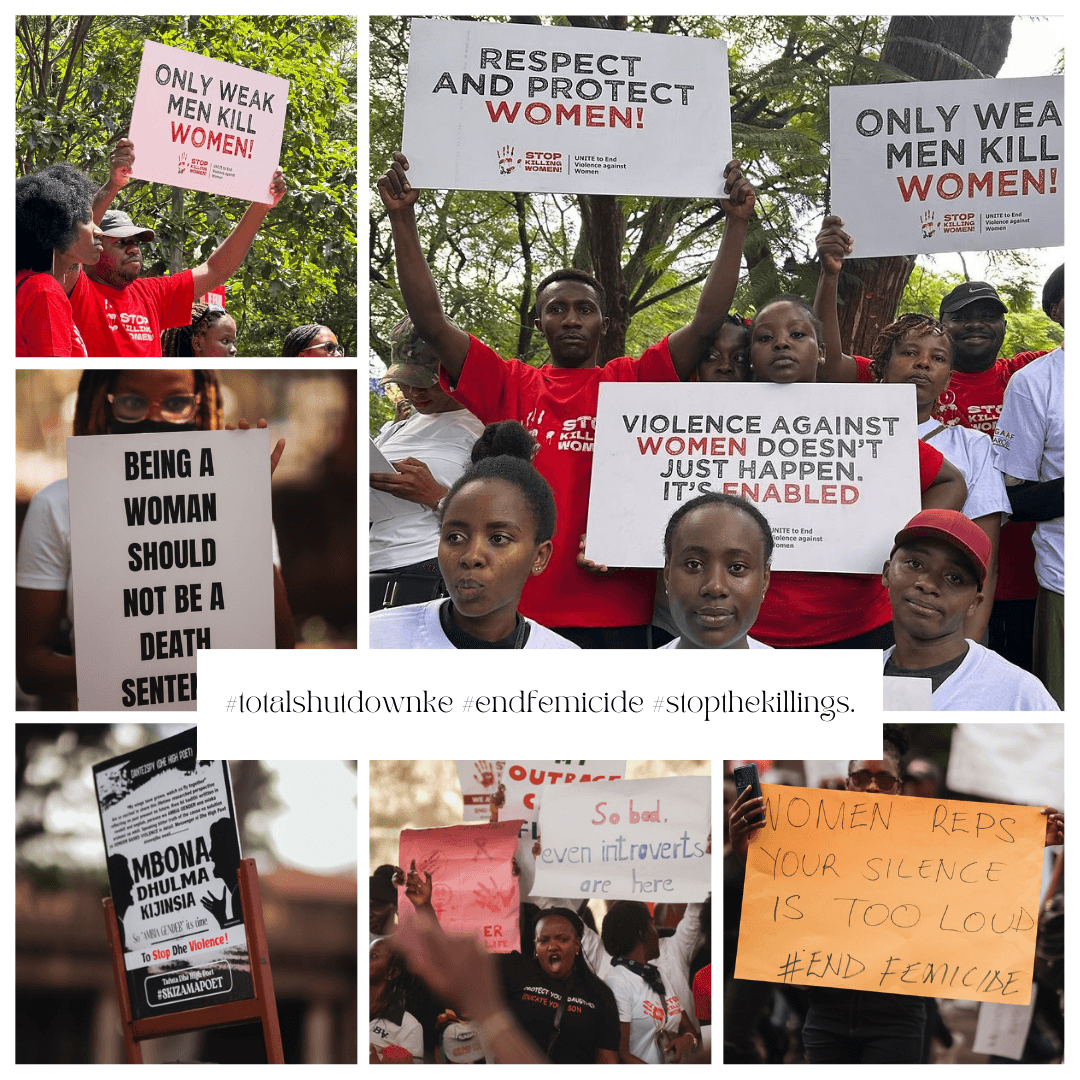
“A country is judged by not how well it treats its rich people but how well it takes care of the weak and vulnerable,” said Eric Theuri -President of the Law Society of Kenya (LSK), during the demonstrations dubbed ‘Feminist March Against Femicide’, held on 27th January 2024, following the rise of femicide cases reported in Kenya since the start of the year.
NairoBits joined the cause to advocate for the rights of weak and vulnerable women, especially disadvantaged youth aged between 17 and 24 from informal settlements, in alignment with our vision to have “Empowered and transformed youth who positively impact societies.”
Aiming at unlocking their potential by building and enhancing relevant interpersonal and professional skills, we equip the youth with the knowledge and skills needed to navigate and protect themselves in today’s society; hence, conversations around their sexual and reproductive health rights (SRHR) which came in handy during the demonstrations. Through our programmatic approach, we conduct mentorship sessions to guide them in facing the harsh realities and challenges of the natural world to help foster resilience.
It was a total shutdown on the streets of Nairobi as women feminists joined forces against the atrocities that have been circulating in the media depicting gruesome murders of young women, including Starlet Wahu, 26 yrs and Rita Waeni, 20 yrs. Among the names mentioned were Maureen Wangui, Yvonne Mwendwa, Grace Wanjiru, Susan Wambui, Jane Kemunto, Bridgit Amondi Ochieng, and Rachel Wambui as read on Counting Dead Women Kenya’s Facebook page.
These are just but a few of the victims; Kenyan media outlets have reported the killings of at least 14 women since the start of 2024, according to Patricia Andago, a data journalist at media and research firm Odipo Dev. Data from Africa Data Hub shows that femicide is not just a 2024 problem, but there have been more than 500 cases reported since 2016.

The demonstrations were significant in sensitizing and creating awareness about targeted gender-based violence in the country. Out of the reported cases, only 15 percent were perpetrated by strangers to the victims. According to the Africa Data Hub, most of the killings were committed by intimate partners and family members, with spouses and boyfriends being the most common offenders.

In addition, they stated that most of the reported femicide cases were preceded by what they call a pattern of abuse where the victims were subjected to domestic violence from their partners before they were brutally murdered.
This has revealed that women are facing a higher risk of experiencing intimate partner violence (IPV) and increasing Gender Based Violence (GBV). To tackle the root causes, protect potential victims, and ensure that justice is delivered promptly and efficiently, immediate and comprehensive action is required from law enforcement, lawmakers, and the community.
NairoBits works alongside human rights societies, including RHRN, dayokenya, nglhrckenya, lovematterskenya ,csa_kenya, SRHR Alliance Kenya, zamara_fdn, Usikimye unwomen, and many others to ensure action against femicide and gender-based violence.
The community must act swiftly to address the underlying causes, safeguard potential victims, create a safe environment for youth to freely express themselves, and guarantee that justice is administered promptly and effectively to prevent seeing young people’s lives and futures destroyed by societal injustices.
This is a wake-up call for the society to work together to make the country’s environment safer for women.